Table of Content
If you want to avoid this aging please be sure to treat the wood with a natural oil on regular basis. Yokoso Japanese Gardens builds country houses, garden houses and pavilions that will last for decades and will gain beauty over the years. In short, your Japanese style country house Zenkei will make a very good investment.

A fully computerized system enables clients to customize their homes with standardized components. Unlike the common Western perception about prefabrication, in Japan factory-manufactured houses are seen as superior to conventionally built ones. This is roughly four times the size of a typical European home and approximately twice the size of an average apartment in the United States. Prefabricated houses, known as souka-ya in Japan, have been popular since the 1950s. These homes are constructed in factories and transported to their final destinations. Because the house is built in a factory in a matter of hours, it is extremely simple to construct.
Modular Bedroom Furniture Décor Ideas
This radical home along Japan’s Tokaido road, the country’s historic eastern sea route, doubles as an art gallery and studio. Japanese architect Tono Mirai—a pioneer of “earth architecture”—works with master artisans to craft a holiday retreat for a family from Tokyo. Minutes from the capital city’s urban bustle, an architect blends steel, wood, and concrete into a harmonious retreat for a family of five.

For authentic feeling, the plant that you should use is bonsai which is a favorite and valuable plant in Japan. But for you who do not like this type of plant or you might not be able to find any in your area, then you can still use other type of plant such as orchid or palm. Try to add bamboo inside a planter on your house; this plant can also be used as room separator.
How to make a small bedroom smell fresh
• Seperation walls and Oriental shutters can be placed to devide the space into smaller rooms. Adding some Tatami mats and a couple of stump tables doesn’t make this Japanese style. Niall has a keen interest in small spaces, green design, and sustainability.

92% of new detached houses we sold in Japan in 2021 were net zero energy houses, achieving our 2022 target of 90% a year early. Built on this unparalleled history and experience, we commit ourselves to a future where people all around the world can live joyful lives in safe, secure and comfortable homes. Sekisui House celebrated our 60th anniversary in 2020, and over those years we have provided over 2.5 million homes to our customers both in Japan and globally.
Stay up to Date on the Latest in Prefab Homes
They were occasionally displayed on shelves, along with ornaments and flowers. The bigger the house, the less can be spent per square foot within a given budget. Big cheap houses often haven’t had much time spent in their detailing, and they just end up being cavernous, bland, and soulless places. For this reason, we recommend building the smallest house that will provide the spaces you require.
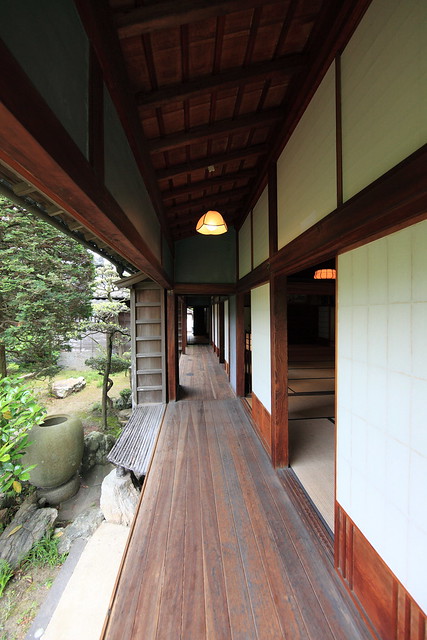
This includes tatami flooring, sliding doors, and wooden verandas circling the home. Additionally, there is minimal furniture; tables are low to the ground, and chairs and beds you might be used to are often nonexistent. • All country houses, pavilions and garden houses are built with prefab modular elements. This beautifully crafted small house has been built by Kayak instructor Brian Schulz. Brian based the design and overall aesthetic of his house on Japanese architecture.
This garden is inside the house, under an open finished roof structure. Gohon-no-ki is a tree-planting program where we plant 5 local, native trees in our customers’ gardens - three for the birds and two for the butterflies. 18.1 million trees have been planted since the program began in 2001. For 60 years , our focus has been to create safe, secure, and comfortable homes, and to improve environmental performance. For the next 30 years , we aim to provide new services that lead to happiness. We lead the housing industry with our unrivaled track record of 69,163 zero energy homes supplied in Japan.
Most of the species of wood we use are not available at building supply yards. Some boards can take years to cure—an unreasonable amount of time for most clients to wait. So for the last forty years we have accumulated lumber to become our own lumber yard.
Take a glimpse at its portfolio filled with homes designed with diversity. A thrilling example of its Asian-inspired work is this Japanese-inspired ranch-style home in Portland. One of its many notable works is the Kukuiula residence “Hale Anuenue” . Its tropical theme blurs the line between indoor and outdoor living with its seamless transition. The interior features white furniture highlighted with orange accents for a bright, coastal coral vibe.

Typically the fine woodwork of traditional Japanese buildings costs a pretty penny. This is due to the level of craftsmanship involved, but Brian has been able to replicate different elements of Japanese architecture, and on a budget too. In Japan, prefab homes are mass-customized using primarily a standardized component system for structural, exterior and interior arrangements. A main feature of Japanese prefab housing is the extensive system for mass-customization, with a high level of consumer participation throughout the process. A modular production method is used, with manufacturers focusing on a custom design for each unit, while mass-producing a variety of housing components for clients to choose from. This system is critical to satisfying the array of demands of the diverse homebuyer demography and to controlling costs through mass-production and economy of scale.
Pastel arches, exposed beams, and an open plan turn a family home into an architecture firm’s radical live/work space. Perhaps the best part of this project is that you can actually stay in the cabin – it’s available for rent through AirBnB. On the other side is the bathroom, complete with a Japanese-style wooden tub and standalone sink.
The walls are filled with cotton insulation, and the interior surfaces have been clad with roughsawn spruce lath, providing a surface for the “real plaster”, which was applied in two coatings. The first coat was a mix of sand, clay and straw that could then be finished with an earth plaster and painted with milk paint. Daily updates on the latest design and architecture vacancies advertised on Dezeen Jobs.




No comments:
Post a Comment